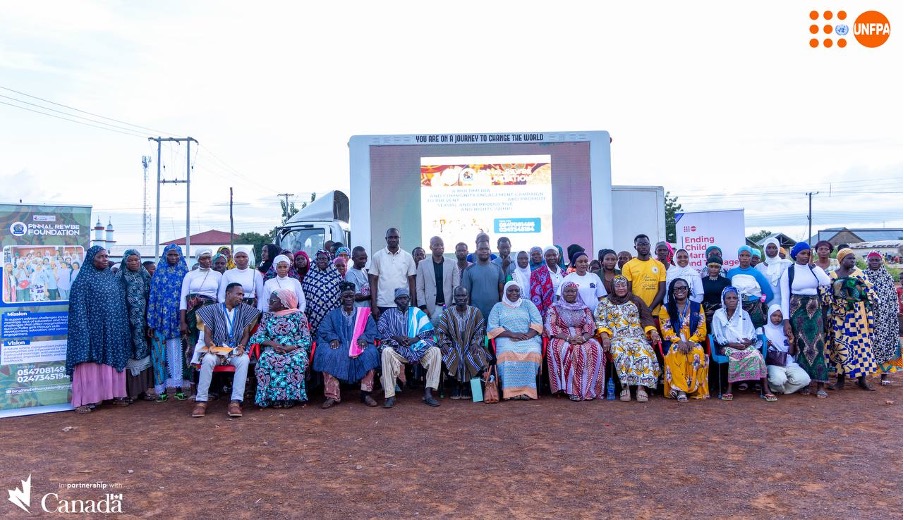
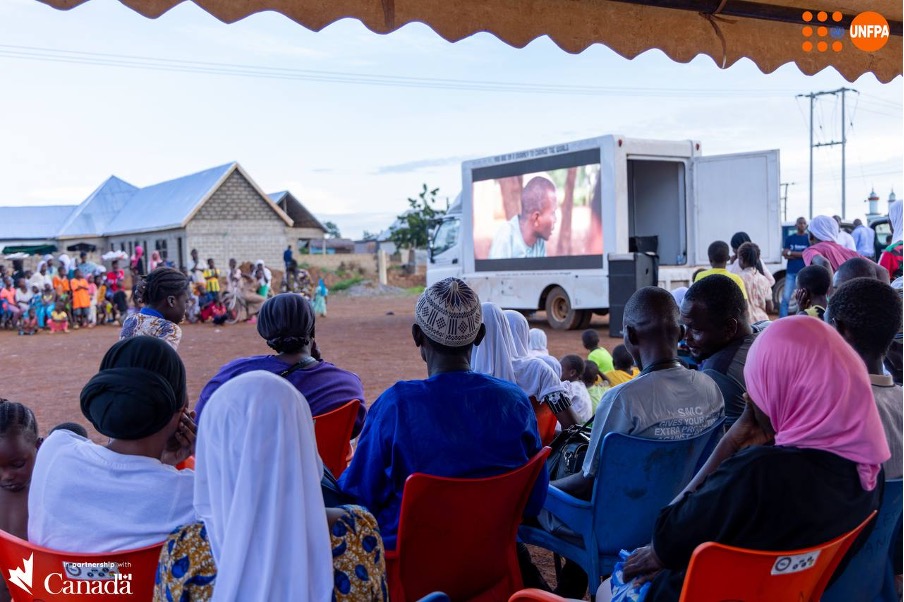
The United Nations Population Fund (UNFPA) Ghana has supported the Pinnal Rewbe Foundation to hold a community durbar in Tamale to screen a short advocacy film on child marriage and stimulate dialogue on the protection of adolescent girls.
The durbar brought together government institutions, civil society organisations, traditional and religious leaders, community members, women and adolescent girls. Participating institutions and organisations included the National Commission for Civic Education (NCCE), civil society groups and community-based organisations.
The event formed part of Pinnal Rewbe’s multimedia advocacy and community engagement campaign to prevent child marriage and promote Sexual and Reproductive Health and Rights (SRHR) among marginalised communities in the Sagnarigu Municipality and Tamale Metropolitan Area.
The initiative is being implemented with support from UNFPA Ghana and the Government of Canada through the AI for Her Future Innovation Hackathon Seed Fund.
The approximately 10-minute film highlights how socioeconomic challenges, teenage pregnancy, harmful gender norms and limited access to education and SRHR services contribute to child marriage.
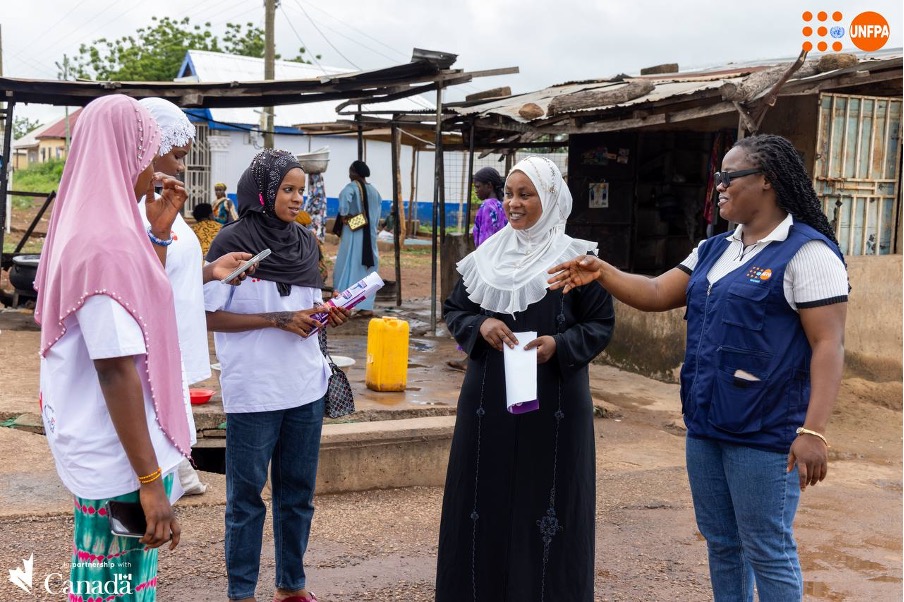
After the screening, participants engaged in discussions and shared recommendations on how communities can better protect girls from early marriage.
Many participants commended the film for its clear messaging and relevance to issues affecting their communities. They recommended that similar screenings be organised in other communities, with traditional leaders, parents, religious leaders and adolescent girls actively involved in the discussions.
UNFPA Ghana Innovations Specialist, Theresa Yeboah commended traditional leaders, religious leaders, parents, families and community members for participating in the dialogue.
“In our communities, the wisdom and guidance of elders and leaders are deeply respected. When communities come together, listen to one another and act together, meaningful change becomes possible,” the Specialist said.
Theresa Yeboah noted that economic hardship, social expectations, adolescent pregnancy and child marriage continue to affect the opportunities available to girls. However, she stressed that the durbar was not intended to blame parents, condemn communities or attack culture and traditions.
“We are here to listen, to learn from one another and to ask an important question: How can we work together to give our girls the opportunity to remain safe, remain in school and fulfil their potential before taking on the responsibilities of marriage and adulthood?” she said.
She highlighted the important roles of chiefs, traditional leaders, Imams, religious leaders, parents, teachers, community opinion leaders and young people in shaping values, guiding families and protecting children.
“Meaningful change begins when we create space to listen respectfully, ask questions and consider different perspectives,” she added.
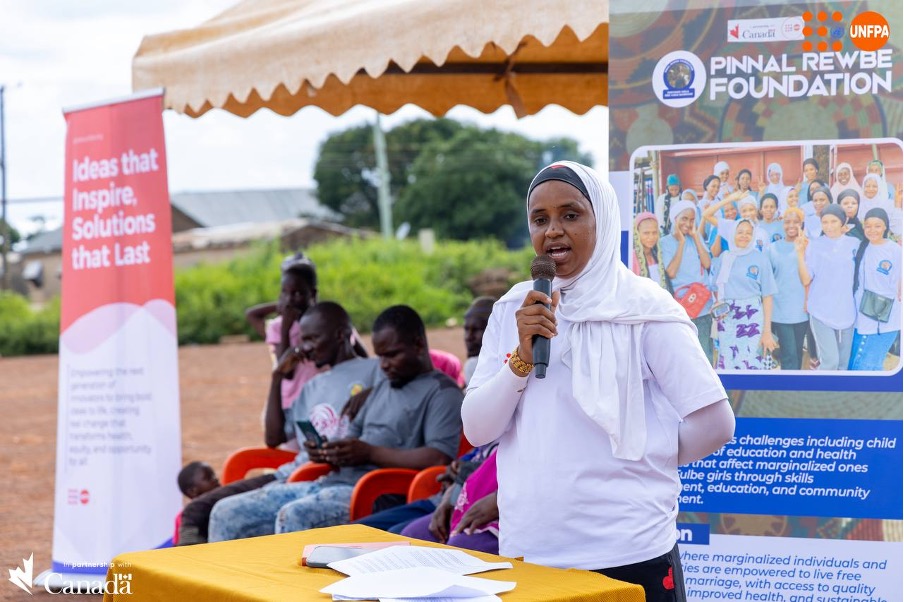
The Chief Executive Officer of Pinnal Rewbe Foundation, Ms. Dukure Salamatu, said the durbar was intended to take advocacy beyond workshops and into spaces where families and community leaders make decisions that affect girls.
“The durbar was an engagement to screen the advocacy video we produced,” she said. “It brought together stakeholders, including government institutions, civil society organisations, traditional leaders, religious leaders, women and adolescent girls, to watch the film, discuss its messages and make recommendations.”
As part of the campaign, Pinnal Rewbe also produced and broadcast three radio jingles in English, Dagbani and Fulfulde.
The multilingual approach is designed to ensure that messages on child marriage prevention and SRHR reach diverse audiences, including Fulbe and other marginalised communities.
Participants at the durbar welcomed the jingles, and the organisation mentioned that the messages will continue to be broadcast through local radio stations to expand public awareness across communities in Northern Ghana.
The durbar forms part of a broader three-month intervention that includes the production and dissemination of an advocacy video, radio broadcasts, social media influencer engagement, stakeholder dialogues and community-based Social and Behaviour Change Communication (SBCC) sessions.
Pinnal Rewbe says the approach is designed to strengthen local ownership and ensure that advocacy against child marriage continues beyond the life of the project.
By combining film, radio, community dialogue and stakeholder engagement, the initiative seeks to challenge harmful social norms, improve access to SRHR information, and support girls to stay in school and make informed decisions about their health, rights and futures.