A consortium of civil society organisations implementing the United Nations Population Fund (UNFPA) Ghana Child Marriage and Adolescent Girls Programme has formally begun its 2026 activities with a renewed commitment to protect vulnerable girls, strengthen community systems and challenge harmful gender and social norms.
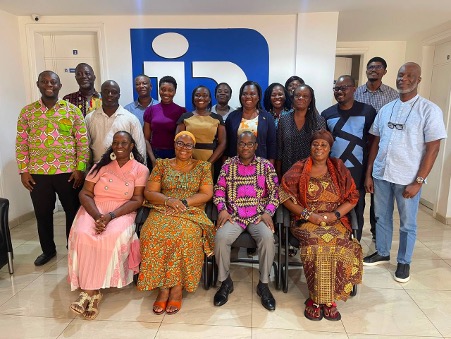
The commitment was reaffirmed on 14 July 2026 during the signing of a Memorandum of Understanding (MoU) between International Needs Ghana (INGH), the lead consortium partner, and its sub-implementing partners: the International Federation of Women Lawyers Ghana (FIDA Ghana), Purim African Youth Development Platform (PAYDP), Obaapa Development Foundation (ODF) and the Media and Communications Advocacy Network (MCAN).
The partnership will work across selected regions, including the Northern, Eastern and Central Regions, to prevent child marriage and promote the rights, health, education and economic prospects of adolescent girls.
Speaking during the MoU signing, Isaac Arthur, Head of Programmes at International Needs Ghana, said the consortium would focus on strengthening both government systems and community-level responses to gender-based violence and harmful practices.
“The purpose is to provide targeted support to beneficiaries under the GBV programme with UNFPA. As part of this agreement with the sub-implementing partners, we are going to work as a consortium.”
He said the programme had two major expectations: improving the capacity of national and sub-national institutions, and strengthening community systems to provide quality sexual and reproductive health information and services.
“The two major expectations from the programme are that we strengthen the capacity of national and sub-national government systems and institutions through policy and accountability, and also communities so that they provide high-quality and comprehensive sexual and reproductive health information and services.”
Arthur added that the partnership would also address discriminatory gender and social norms that limit women’s and girls’ rights, opportunities and decision-making.
“We also strengthen mechanisms and the capacities of government and non-government actors, institutions and data systems to address issues of discriminatory gender and social norms so as to advance gender equality and women’s decision-making across the development and humanitarian continuum.”
The MoU signing provided an opportunity for partners to discuss programme expectations, implementation arrangements and recommendations from recent donor audits and spot-check exercises. Key areas included programme quality, financial management, documentation, reporting and operational compliance.
Arthur said accountability was central to the consortium’s work, rather than a purely administrative requirement.
“International Needs Ghana is going to lead the GBV consortium. That means we coordinate the overall programme execution and ensure sound financial management.”
The organisation will coordinate the work of PAYDP, FIDA Ghana, MCAN and ODF, while supporting timely implementation, regular reporting and accountability for programme resources.
International Needs Ghana will also implement the Promoting Adolescent Safe Spaces initiative, known as PASS. The intervention will create safe spaces for both girls and boys and facilitate engagement with parents, caregivers, community facilitators and other duty-bearers.
“We will also implement the multi-adolescent safe space programme, which is called PASS. With this particular initiative, we will focus on the creation of safe spaces for both boys and girls and community-level engagement with parents and caregivers.”
The programme will include reflection sessions, mentorship and leadership opportunities for adolescents, with boys encouraged to become allies in the advancement of girls’ rights.
“We also need mentorship programmes for adolescents, particularly the girls, and the boys serving as allies.”
During the 2026 implementation cycle, the consortium expects to directly engage at least 3,000 adolescent girls and 700 boys. The girls will receive information and support in sexual and reproductive health and rights, leadership, life skills and economic empowerment.
The approach recognises that preventing child marriage requires more than working with girls alone. Engaging boys and young men is intended to promote positive masculinities, shared responsibility and stronger community ownership of gender equality.
Each consortium partner will contribute specific expertise to the programme.
FIDA Ghana will lead advocacy for gender-responsive programming and support the enforcement of policies and legislation addressing gender-based violence and harmful practices, including child marriage.
“FIDA would also be focused on advocacy for gender-responsive programming and support for the enforcement of policies and legislation addressing gender-based violence issues and harmful practices, which includes child marriage,” Arthur said.
PAYDP will provide targeted support to marginalised adolescent girls, particularly Kayayei, or head porters, by increasing their awareness of sexual and reproductive health and rights and improving their access to gender-based violence information and services.
“PAYDP, on the other hand, will provide targeted support to marginalised adolescent girls, particularly the Kayayei, by increasing their awareness of sexual and reproductive health and rights and also improving access to GBV-related information and services.”
ODF will work closely with traditional authorities through its “One Paramountcy at a Time” initiative. The organisation will lead advocacy, education and mobilisation activities aimed at traditional leaders in programme regions.
“ODF is known for its collaboration with traditional authorities in Ghana. They will spearhead advocacy, education and mobilisation efforts under an initiative known as ‘One Paramountcy at a Time’ to end gender-based violence and harmful practices.”
According to Arthur, the initiative will engage traditional leaders to address negative gender and social norms and reinforce public commitments to ending child marriage within their traditional jurisdictions.
MCAN will support programme visibility, media advocacy and documentation.
“MCAN will also ensure programme visibility and media advocacy, as well as providing documentation support across the programme.”
The consortium maintains that laws and policies alone cannot end child marriage. Sustainable change also depends on families, community leaders, schools, youth groups and local institutions challenging harmful practices and supporting girls to remain in school.