
The Ghana Education Service (GES) has trained about 600 adolescent learners as peer educators under the United Nations Population Fund (UNFPA) Adolescent Girls Programme, in a renewed effort to tackle gender-based violence and improve reproductive-health awareness in schools.
The initiative, implemented through GES’s School Health Education Programme (SHEP) Unit, brought together boys and girls, with girls forming the majority, to prepare them to share accurate information and support fellow students on issues affecting adolescent wellbeing.
Building student-led change
Rather than relying solely on teachers or external facilitators, the programme positions young people as trusted voices within their own schools. The selected students received practical training on gender-based violence, adolescent reproductive health, menstrual hygiene management, and healthy lifestyle choices.
Training sessions were held in February and October 2026. Participants took part in group exercises, panel discussions, and interactive activities designed to strengthen their confidence in moderating sensitive conversations and guiding classmates who may be facing abuse or other difficulties.
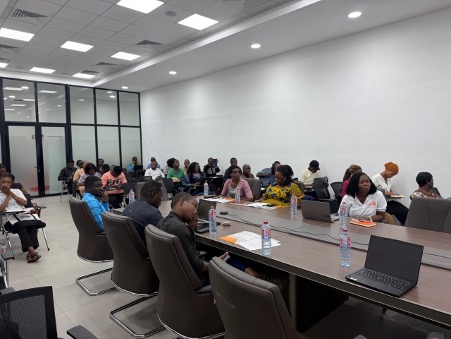
At a media engagement held after a one-day capacity-building workshop for journalists, organised by the Media and Communication Advocacy Network (MCAN) in partnership with the United Nations Population Fund (UNFPA), Ernest Amoah Ampah, a Programme Officer at the Ghana Education Service’s School Health Education Programme (SHEP) Unit, explained that the initiative aims to strengthen adolescents’ capacity to share reproductive-health knowledge with classmates.
He said SHEP coordinators in senior high schools delivered the training, which focused on preparing students to speak confidently about issues affecting their peers. He said participants were equipped to advocate for reproductive rights and facilitate discussions among fellow students.
“We’ve trained them on how to advocate for their peers and how to lead peer sessions. We’ve trained the adolescents as peer educators. We’ve trained the club leaders on menstrual hygiene management, adolescent reproductive health and how to prevent gender-based violence,” Mr Ampah said.
Mr Ampah also highlighted a decision-making resource introduced by GES known as the “Power Model.” He described it as a practical guide that helps young people weigh their choices and make informed decisions on reproductive health and other personal concerns.
“We use what’s called a Power Model, and the Power Model is a tool that we use to help the adolescent to make the right and informed decision about reproductive health and anything that they may be worried about,” he explained.
In addition, he said GES had produced activity cards addressing reproductive health, gender-based violence, HIV and sexually transmitted infections, and life-skills development. These materials are intended to support structured conversations and learning activities in schools.
Mr Ampah further noted that club leaders in the participating schools had received training in leadership and communication, enabling them to guide discussions, engage their peers and champion healthier choices within their school communities.
“And also the club leaders in the school, we’ve also trained them on leadership and communication skills,” he added.
Teachers as support system
Teachers were also trained to provide ongoing guidance to the peer educators after the workshops. They will support school-based sensitisation activities, where students will use specially developed activity cards to lead discussions and pass on what they have learned.
Ernest Amoah Ampah said the approach was intended to create adolescent leaders and reliable sources of information among their peers. He explained that the training went beyond classroom instruction by encouraging students to participate actively in discussions on issues that directly affect them.
Part of wider programme
The peer-educator initiative falls under the UNFPA Adolescent Girls Programme, which began in 2025 and is being implemented with UNICEF, with support from Global Affairs Canada and regional coordinating councils in the Volta, Eastern, Ashanti and North East regions.
The programme seeks to give adolescents, especially girls, the knowledge, confidence and skills to protect themselves, identify abuse, and contribute to safer school environments. It also reinforces GES’s broader commitment to ensuring that students are not forced out of school by teenage pregnancy, substance abuse, or other preventable challenges.
Why peer education matters
Peer-led education can make reproductive-health information more accessible because students often find it easier to discuss sensitive subjects with people of a similar age. The approach also complements Ghana’s School Health Education Programme, which provides health education and support services aimed at improving children’s wellbeing and educational outcomes.
By training students to recognise harmful practices, communicate respectfully and seek appropriate support, GES hopes the initiative will help create schools where adolescents can learn, speak up and thrive.