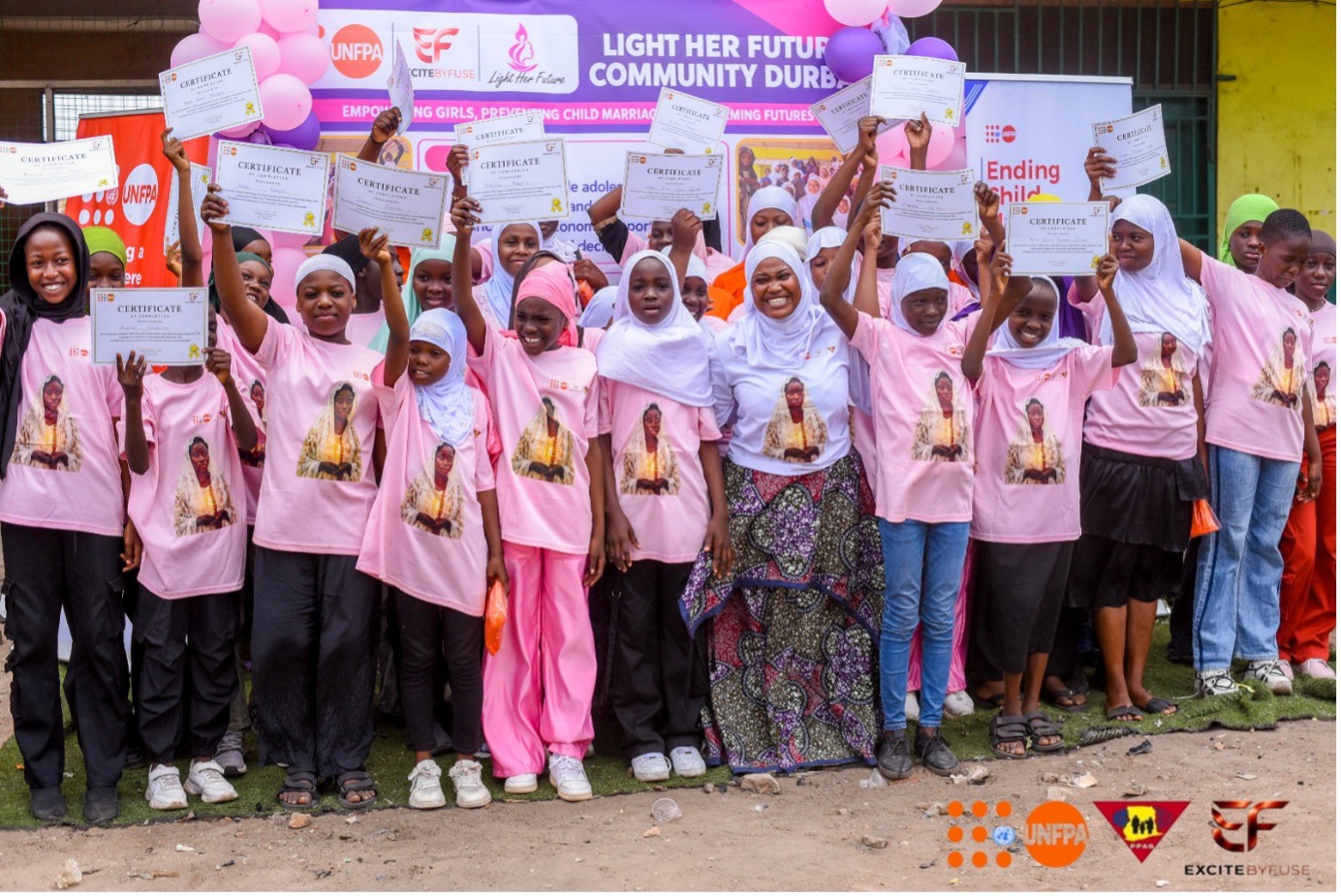
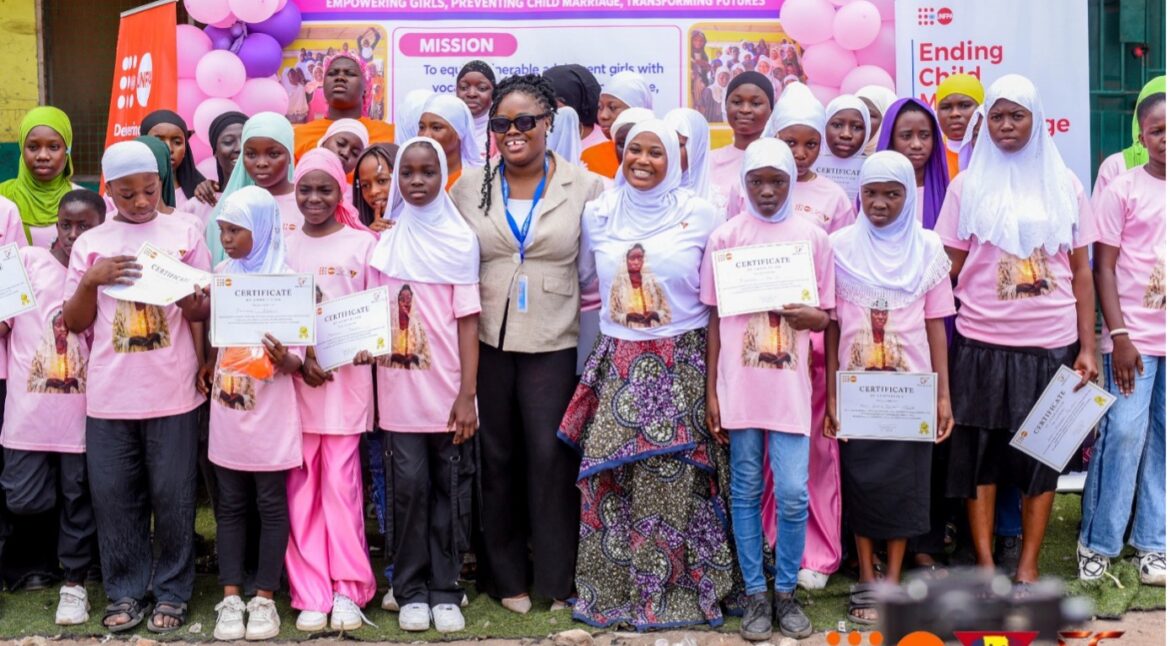
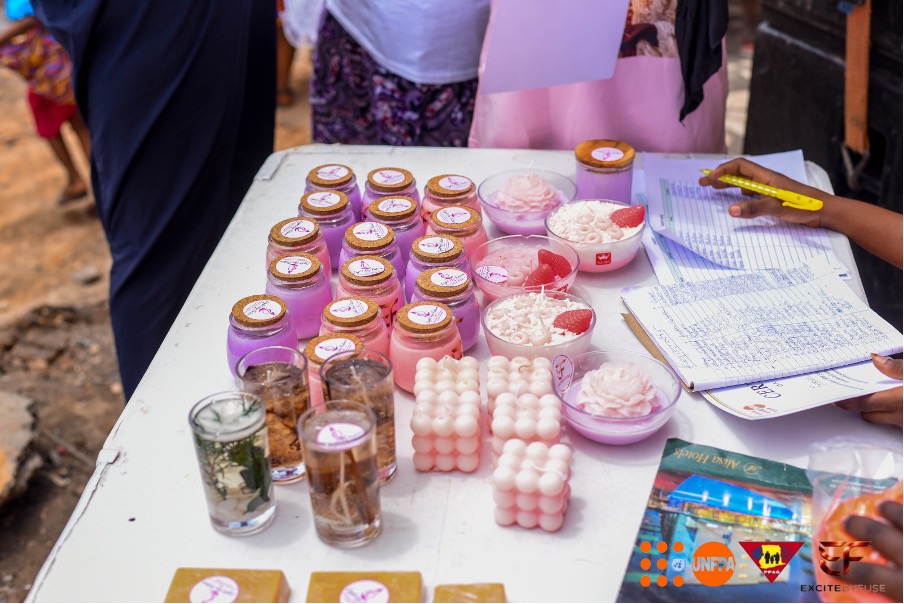
The United Nations Population Fund (UNFPA) Ghana and Excitebyfuse have graduated more than 30 vulnerable adolescent girls in Shukura, Ansarudeen from a three‑month initiative that combined Sexual and Reproductive Health and Rights (SRHR) education with hands‑on vocational training in soap and candle making, mentorship and business coaching.
The initiative, implemented under the Light Her Future Initiative, aimed to reduce drivers of child marriage such as poverty, limited schooling and lack of SRHR information by giving girls practical livelihood options and the confidence to choose their own futures.
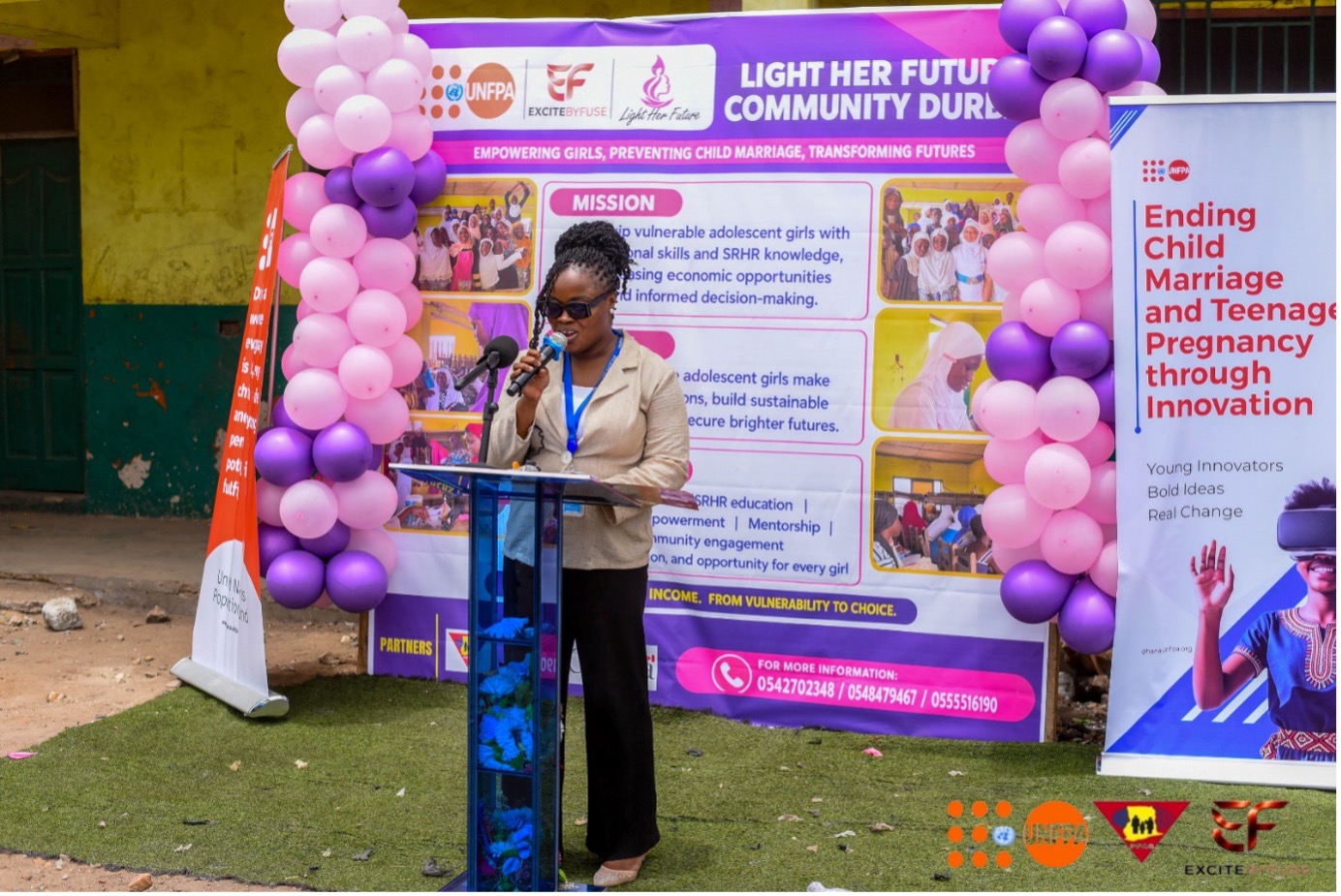
Innovation Specialist at UNFPA Ghana, Theresa Yeboah, delivering remarks at the graduation held on September 10, 2026, framed the project as an “actionable, community‑rooted” response to child marriage.
She noted that globally about 12 million girls are married before 18 each year, with poverty a key driver, and stressed that awareness alone is insufficient without income, opportunity and economic empowerment paired with vital health education.
“Globally, an estimated 12 million girls are married before the age of 18 each year, with poverty identified as a major driver. We know that adolescent girls face interconnected challenges of poverty, limited educational opportunities, and inadequate access to Sexual and Reproductive Health and Rights (SRHR) information. These overlapping burdens reinforce each other, directly increasing a girl’s vulnerability to early marriage, teenage pregnancy, and school dropout”, she said.
Theresa Yeboah further highlighted that the Shukura pilot was aimed at tackling these overlapping risks: poverty, limited education and inadequate SRHR access, that reinforce vulnerability to early marriage, teenage pregnancy and school dropout. By integrating marketable skills with SRHR knowledge, mentorship and business coaching, Light Her Future bridges the gap between “knowing your rights” and “having the means to act on them.”
“Light Her Future has successfully bridged this gap, driven by Fuseina’s dedication to the girls of Shukura despite all the limitations. Over the past three months, this pilot empowered over 30 vulnerable adolescent girls. It equipped them with immediate income-generating skills in high-demand soap and candle making, seamlessly paired with critical SRHR education, mentorship, and business coaching to build independence”, she added.
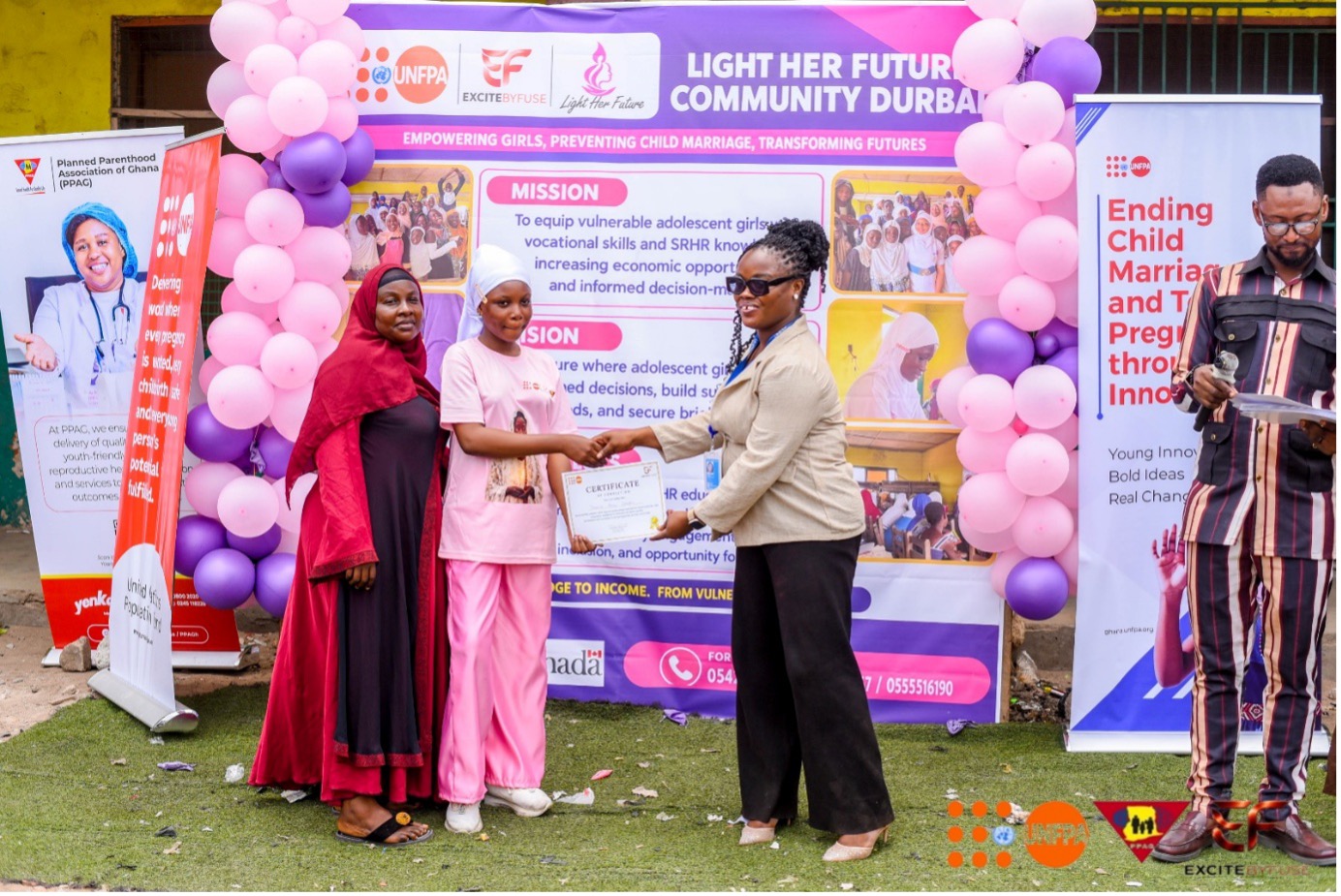
Over three months, the young girls were trained in high‑demand soap and candle making, alongside SRHR education, mentorship and business coaching to support independence and informed decision‑making.
Theresa Yeboah mentioned that participants also gained digital tools and skills relevant to today’s economy, pointing to Ghana’s roughly 70% internet penetration (about 24 million users) as a platform to market products beyond their immediate communities.
“You have been equipped not only with handy skills but also with digital tools and skills necessary for today’s economy; success is no longer confined to a physical store. With a national internet penetration rate of about 70% connecting over 24 million users, the digital landscape offers unprecedented reach. You now hold direct access to a vast customer base right in the palm of your hand”, she said.
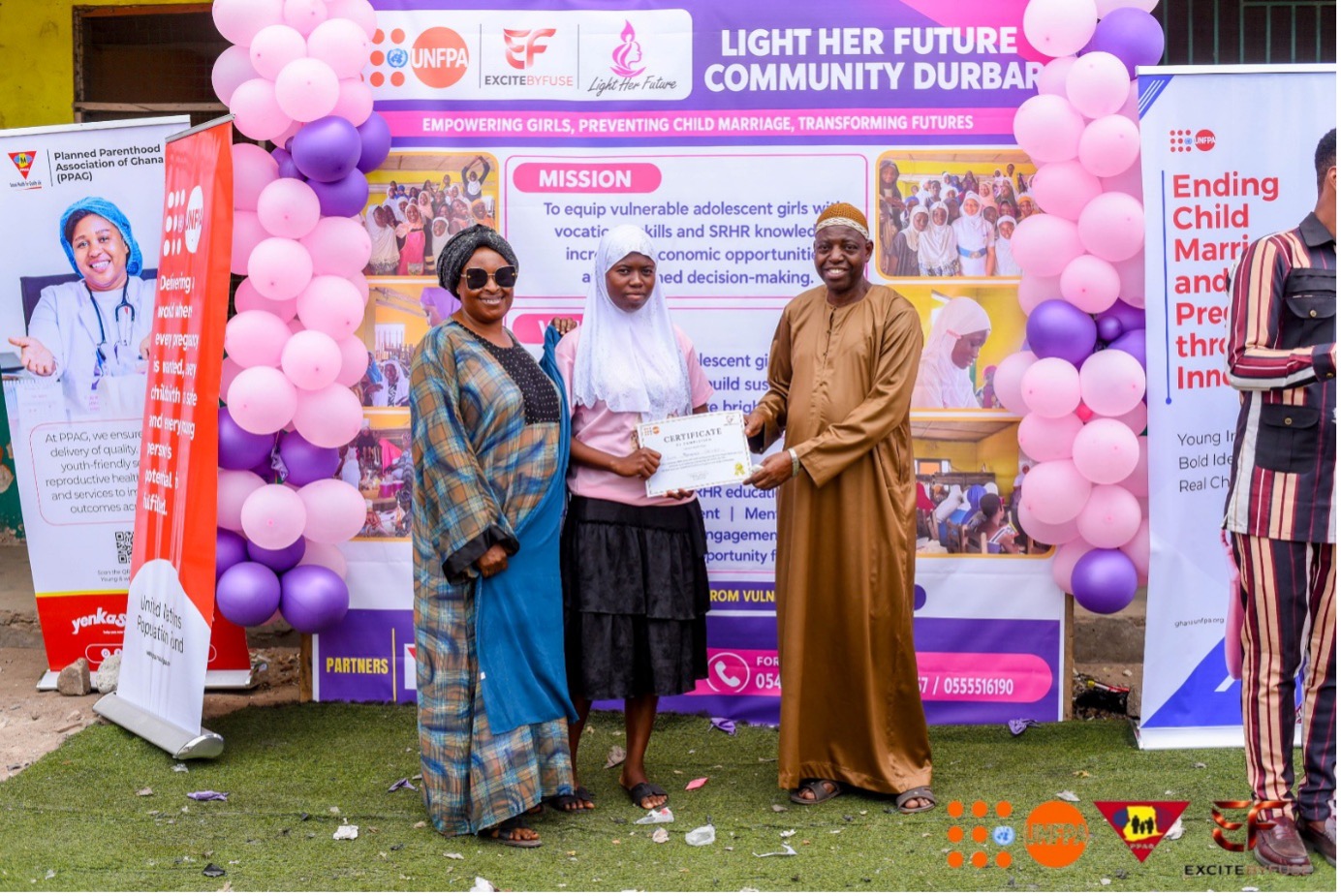
Fuseina Abdullah, CEO of Excitebyfuse and project lead for Light Her Future, said the initiative was born from a simple belief: “every girl deserves a future she can choose, not a future chosen for her, not a future forced on her, not a future she can’t control.”
She emphasized that child marriage should not be reduced to statistics, as it shapes real lives, education trajectories and future prospects for young women.
Theresa Yeboah, ending her remarks, tied the model to UNFPA’s three transformative results: ending unmet need for family planning, ending preventable maternal deaths, and ending gender‑based violence and harmful practices including child marriage.
With chiefs and community leaders present, she placed responsibility on the Shukura community to sustain the gains of these young girls.
“While the training is complete, the sustained success of this initiative now rests with you, the Shukura community. As these newly trained entrepreneurs step forward, we ask that you fiercely champion them. Buy their products, protect their rights, and encourage their continued growth. Because when we invest in an adolescent girl, we do not just light her future; we illuminate the path for her entire community”, she said.
Beneficiaries expressed gratitude, saying the blend of vocational skills and SRHR education would help them earn income, become economically independent and make better life choices, and they encouraged other girls to pursue practical skills and stay in school.
The programme reflects wider evidence and policy direction in Ghana that vocational training, school retention, economic empowerment and tailored advocacy are critical to delaying marriage and protecting girls’ rights.